For an ordinary picnic cooler, I would start with the Igloo Maxcold Large for value, or Arctic Ice Alaskan Medium for a food-focused pack. Choose YETI ICE Block to supplement loose ice, Chillin’ Brew for a dedicated drinks cooler, and Fit + Fresh XL Slim for a compact lunch bag. Check the fit before buying.
| Exact option | Best use | Dimensions per pack | Price band |
|---|---|---|---|
| Igloo Maxcold Large | General-purpose value | 8.75 × 5.67 × 1.38 in | Value |
| YETI ICE Block, 2 lb | Alongside loose ice | 8 × 5.4 × 1.6 in | Premium per pack |
| Arctic Ice Alaskan, Medium | Chilled food | 7.75 × 6.75 × 1.25 in | Midrange; maker sells a pair |
| Arctic Ice Chillin’ Brew, Medium | Drinks-focused cooler | 7.75 × 6.75 × 1.25 in | Midrange; maker sells a pair |
| Fit + Fresh Cool Coolers XL Slim | Lunch bags and narrow gaps | 7 × 4.75 × 0.5 in | Value; four-pack |
Dimensions are longest side × shorter side × thickness, in inches. Sources: the maker pages linked in each card and Arctic Ice’s size charts, checked October 2026. Bands describe relative purchase cost, not equal cooling capacity; pack counts and weights differ.
An ice pack has to earn the space it occupies. A thick block may be sensible under a large load of drinks, but awkward beside a lunch box. A slim pack may fit beautifully without supplying enough cooling for a family cooler.
For a very occasional trip, freeze suitable water bottles instead. Reusable packs are most attractive when their shape, handling or repeated use solves something that ordinary ice does not.
Which ice packs are best for your cooler?
1. Igloo Maxcold Large: Best general-purpose value
The Maxcold Large is my uncomplicated starting choice for someone who wants a reusable block without paying for a premium cooler brand. Its fairly narrow footprint gives you more placement options than a broad square panel.
Key specs: 8.75 × 5.67 × 1.38 inches; 2.05 pounds; reusable gel-filled block; hand wash. See Igloo’s Large model specifications.
Laura Lancaster included Maxcold in her Outdoor Life comparison and rated it highly for value. Her tested size was Medium, so its recorded temperatures should not be presented as a test of this Large block.
Pros
- Low-cost entry point
- Clear dimensions and weight
- Reusable without adding water
Cons
- Rigid shape cannot fill every gap
- Needs hand washing
- Each block adds just over two pounds to carry
Skip it if: you need a half-inch panel for a slim bag, or want a specified phase-change temperature for a particular load.
2. YETI ICE Block 2 lb: Best for supplementing loose ice
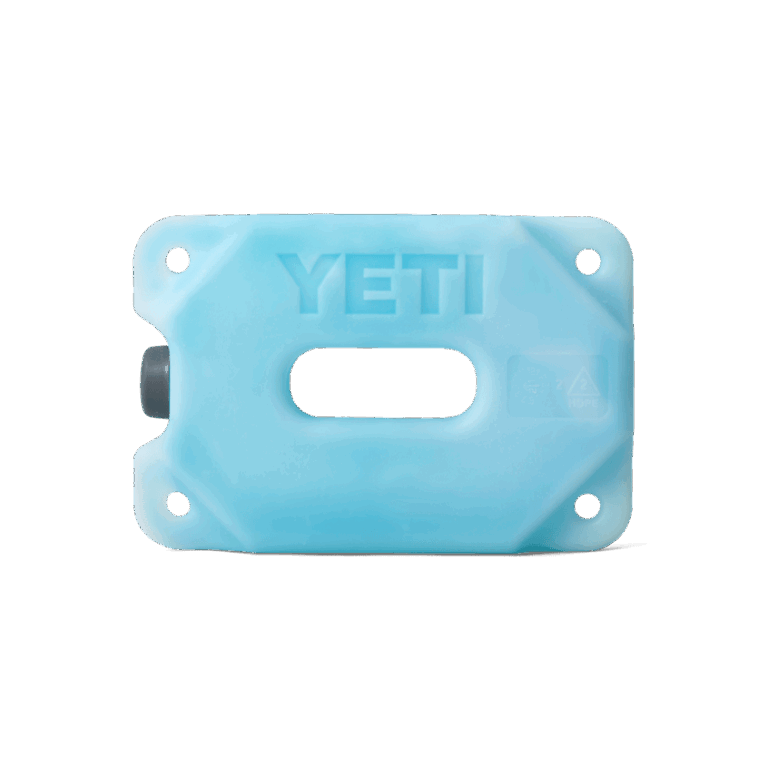
Buy ICE Block for the job YETI describes: supplementing bagged or block ice in a hard cooler. That is a clearer reason to choose it than assuming one expensive block can replace all the ice in a large chest.
Key specs: 8 × 5.4 × 1.6 inches for the 2-pound model; other sizes available; five-year warranty. Check YETI’s current ICE Block page against your cooler’s internal measurements.
The important buying detail is the product family. ICE Block, ICE Sheet and older Thin Ice reviews are not interchangeable. Make sure the listing, size and thickness match the arrangement you planned.
Lisa Schweitzer tested this 2-pound Block in her Yahoo comparison. After 36 hours of freezing and six hours on a counter, she recorded 32°F (0°C); it also survived her water-bottle drop check. That supports durability and temperature retention under her conditions, without establishing how long your food stays cold.
Pros
- Clearly defined use alongside ice
- Several sizes to plan around
- Five-year warranty
Cons
- Higher cost per block
- Uses more depth than a slim sheet
- Does not eliminate the need to plan loose-ice space
Skip it if: you want an ice-free lunch-bag arrangement or are choosing solely because another YETI product tested well.
3. Arctic Ice Alaskan Medium: Best food-focused option
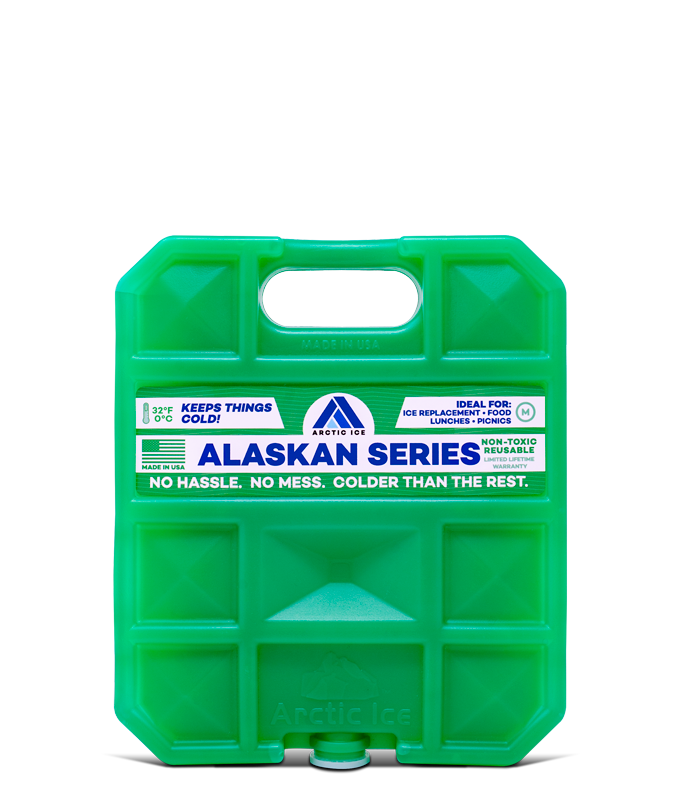
I would choose Alaskan before Chillin’ Brew for a cooler mainly carrying chilled food. Its stated phase-change point is 32°F (0°C), rather than the below-freezing target of the drinks-focused range.
Key specs: 1.5 pounds; 7.75 × 6.75 × 1.25 inches; top-rack dishwasher-safe according to the maker. The Medium two-pack was available at the check date; the Large variant was unavailable.
That temperature specification does not mean the pack leaves your freezer at 32°F. It can initially be much colder, so keep delicate produce from resting directly against a freshly frozen pack.
Pros
- Food-focused phase-change target
- Several sizes in the range
- Top-rack dishwasher cleaning
Cons
- Broad footprint needs checking
- Still capable of freezing nearby food initially
- Not designed to keep frozen food frozen
Skip it if: the goal is transporting ice cream or another load that must remain frozen. That calls for a different cold-chain plan.
4. Arctic Ice Chillin’ Brew Medium: Best for a dedicated drinks cooler
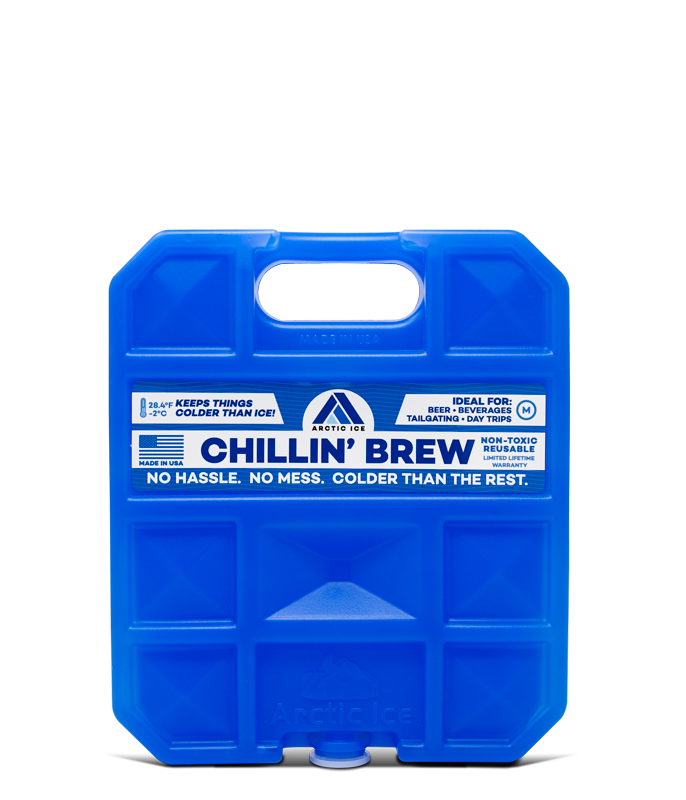
Chillin’ Brew makes sense when the cooler’s job is cold beverages. Arctic Ice specifies a phase-change temperature of about 28°F (−2°C). I would keep fragile produce out of that same tightly packed contact zone.
Key specs: 1.5 pounds; 7.75 × 6.75 × 1.25 inches; rigid container with a carry opening. The maker’s Medium option is sold as a pair.
Lisa Schweitzer’s Yahoo comparison gives relevant firsthand evidence for this size. After 36 hours in a freezer, her Medium Chillin’ Brew stayed below freezing during a six-hour countertop check and survived her water-bottle drop check. That is useful comparative evidence, not a six-hour food-safety promise inside your cooler.
Pros
- Designed around colder drinks
- Named reviewer checked the Medium size
- Grip opening helps handling
Cons
- Below-freezing contact can damage delicate food
- Needs enough freezer time to freeze fully
- Broad rigid panel can be awkward in a narrow bag
Skip it if: your main concern is lettuce, fruit or food that you specifically want to avoid freezing.
5. Fit + Fresh Cool Coolers XL Slim: Best for lunch bags and narrow spaces
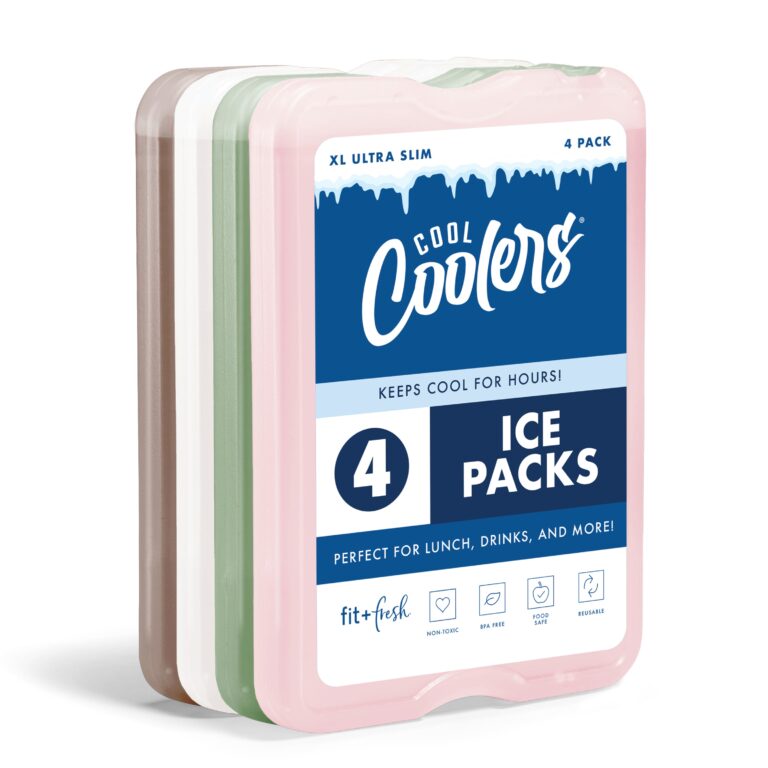
These are the practical choice when thickness is the constraint. A half-inch panel can fit beside a lunch container where a bulky block cannot, and the four-pack lets you distribute panels around the load in a small soft-sided cooler.
Key specs: four packs, each 7 × 4.75 × 0.5 inches; BPA-free plastic; rinse and pat dry. This is the current XL Slim Neutral Multicolor version, not the shorter Cool Coolers pack found in some older reviews.
Choose it for the shape, not an assumed full-day duration. A compact lunch bag and a large picnic chest have very different cooling demands, even if both accept the same panels.
Pros
- Half-inch thickness
- Four separate panels
- Convenient fit around lunch containers
Cons
- Not my choice as the main cooling load for a large chest
- More individual pieces to track
- The seven-inch length still needs checking in a small bag
Skip it if: you need a substantial cold reserve for a big drinks cooler and have room for larger blocks or loose ice.
How do you check whether an ice pack fits?
Measure the cooler where the pack will actually sit. The opening can be wider than the base, and a drain housing, rounded corner or divider can steal the space that looked available in a product photograph.
In a Roadie 15 owner discussion, one contributor corrected their initial plan after finding that the taper prevented three packs from fitting along the bottom. That is useful firsthand fit information, even though it does not establish thermal performance.
- Measure the narrowest usable length and width at the intended position.
- Allow for the pack’s thickness, handle and any protruding cap.
- Check whether the basket, divider and lid still work.
- Try a cardboard footprint before buying; account separately for depth.
- Check that the same packs fit in your freezer with room to freeze properly.
A simple space example: a rectangular 8 × 5.4 × 1.6-inch envelope occupies about 69 cubic inches, or 1.13 liters. Two such envelopes use about 2.27 liters before allowing for packing gaps. This is bounding-box space, not the pack’s liquid volume or a measure of cooling capacity.
Those dimensions come from the 2-pound YETI Block. The calculation is length × width × thickness, then cubic inches × 0.016387 for liters. It shows why nominal cooler capacity is not the same as usable food capacity after adding cold packs.
Are ice packs better than loose ice or frozen bottles?
| Cooling option | Useful advantage | Main compromise |
|---|---|---|
| Reusable packs | Contained meltwater and repeatable shape | Fixed shapes take space and need refreezing |
| Loose ice | Fills gaps around drinks and is easy to replenish | Meltwater requires suitable packaging and handling |
| Frozen water bottles | Low extra cost and water to use after thawing | Rounded shapes leave gaps; bottles need room for expansion |
| Packs plus ice | Combines reusable blocks with gap-filling ice | Requires space for both |
Use bottles suitable for freezing and leave expansion space according to their instructions. Keep drinking-water containers clean and separate from raw-meat leakage.
For a multi-day trip without freezer access, plan to replenish loose ice. Once a reusable pack has warmed, you need access to a freezer before it can provide the same cooling reserve again.
If the cooler itself is the limiting factor, the picnic-cooler guide is a better next step than buying progressively more expensive packs for an unsuitable bag.
Why do ice packs sometimes freeze the food?
The freezing point printed on a pack is not necessarily its temperature when you remove it from the freezer. A pack intended to change phase around 32°F (0°C) can start well below that after freezing.
Direct contact matters. Place delicate produce in a suitable container with separation from the coldest packs, and monitor the cooler. Do not solve accidental freezing by allowing the rest of the perishable food to become too warm.
Owners in a YETI ice discussion described both partially frozen lunches and using blocks with loose ice. These are individual setups, not controlled comparisons, but they reinforce why “colder” is not the only buying goal.
How many ice packs do you need to keep food safe?
Start with a known ice load or the pack maker’s guidance, then verify it in your cooler. A count based only on cooler volume misses the food’s starting temperature, weather, insulation and how often you open the lid.
A buying example: Arctic Ice advises starting with approximately the same weight of Alaskan packs as the regular ice you would use. If a comparable outing needs 6 pounds of ice, that means four 1.5-pound Medium packs—two of the maker’s two-packs, not one.
This is an application of Arctic Ice’s Alaskan sizing guidance, not a rule for every gel formulation. Check that those four panels leave room for the food. A hotter or longer trip needs a fresh plan, even with the same cooler.
USDA outdoor-food guidance says to keep cold perishable food at 40°F (4.4°C) or below. Use a thermometer in the cooler and enough cooling to maintain that condition; a pack that still feels cold does not prove the food is safe.
- Chill the food and drinks before packing, and pre-cool the cooler.
- Freeze the packs completely according to their instructions; leave more preparation time when freezing several large packs together.
- Keep raw meat sealed and separate from ready-to-eat food; choose suitable picnic food containers.
- Keep the cooler shaded and closed between uses.
- Plan how you will add ice or refrigerate the food if temperatures rise.
For a familiar trip, record the amount of cooling, conditions and thermometer readings. Use that as a starting point next time, with adjustments for hotter weather or a longer outing. A single successful picnic is not a guarantee for every trip.
What should you look for when buying cooler ice packs?
| Factor | Why it matters | What to check |
|---|---|---|
| Exact model and size | Reviews may describe an older or smaller version | Name, weight, dimensions and pack count |
| Intended use | Food, drinks and frozen goods need different plans | Maker’s phase-change target and directions |
| Freezer preparation | A partly frozen pack has less reserve | Required freezer conditions and lead time |
| Cleaning and durability | Packs share space with food and containers | Seams, caps, washing restrictions and damage |
| Trip logistics | A long outing may outlast the initial cooling | Refreezing or ice-replenishment access |
Replace a leaking or damaged pack according to its instructions. “Non-toxic” labeling is not an invitation to consume the contents.
How I chose these ice packs
I compared current maker specifications, available variants, dimensions, care instructions and intended uses. The shortlist covers five distinct jobs rather than treating every cooler as a large drinks chest. I also checked the manufacturer’s photographs and size charts so the pictured pack matches the named version.
For firsthand evidence, I read Laura Lancaster’s Outdoor Life comparison and Lisa Schweitzer’s Yahoo tests. Both include measurements made with packs outside a cooler. Those results help describe their procedures; they do not establish how long food stays safe inside a particular cooler.
I read owner discussions about pack choices, the Roadie 15 fit problem and everyday YETI use. They informed the fit and food-freezing checks. I did not turn subjective reports of “days cold” into a duration ranking, or transfer Thin Ice results to ICE Block.
Choose by the load and the available space. Igloo is the value starting point, Alaskan suits chilled food, Chillin’ Brew suits a drinks-focused setup, and YETI Block belongs alongside ice. Use the thin Fit + Fresh panels where a larger block will not fit—and let a thermometer verify the result.
