My picks: choose the POLYWOOD Vineyard for outdoor dining, matching its Bar or Counter model to your table. Article Svelti suits a sheltered counter; IKEA NÄMMARÖ is the affordable wooden option. For a roomy swivel position, choose the POLYWOOD Nautical; matching seat height still does not guarantee the arms will tuck in.
| Outdoor stool | Best use, seat height and main tradeoff |
|---|---|
| POLYWOOD Vineyard | Outdoor meals. Bar: 30-inch seat, 37.5-inch arms. Counter alternative: 24-inch seat, 31.5-inch arms. Wide and heavy. Premium. |
| Article Svelti Counter | Sheltered counters. 25.25-inch seat; backrest, no arms. Needs protection from intense sun. Budget. |
| IKEA NÄMMARÖ | Backless wood. 28.75-inch seat; no arms. Re-stain and protect. Budget. |
| Flash Furniture 24-inch | Stackable extras. 24-inch seat; no arms. Small seat; protect from prolonged rain. Budget. |
| POLYWOOD Nautical Swivel | Roomy swivel bar. 29.4-inch seat; 37.7-inch arms. Heavy at 61 lb. Premium. |
Sources: linked manufacturer and brand-owner specifications, checked November 2026. Heights are floor-to-seat or floor-to-arm, not overall height. US price bands per chair: budget under $100; midrange $100–$249; premium $250 and above, before delivery/tax. Color and pack size can change the price.
Which outdoor bar stool suits your setup?
Measure from the finished patio floor to the top of your eating surface. Match that to the stool’s seat height, not its overall height including the backrest.
Start with your surface height:
- Counter: a 34–37-inch surface generally pairs with a 24–27-inch seat.
- Bar: a 40–42-inch surface generally pairs with a 28–32-inch seat.
These manufacturer height ranges are categories, not guaranteed pairings. Check the actual seat gap and make sure the arms clear the lowest obstruction underneath.
- Meals at an exposed bar: start with the Vineyard; choose the Nautical only if turning toward the conversation is worth its extra width, weight and cost.
- An exposed counter: consider the separate Vineyard Counter VND231 described below; the taller bar model is not adjustable.
- A sheltered counter: choose Svelti for back support or the Flash Furniture stool when stacking matters more than a generous seat.
- A wooden bar on a smaller budget: consider NÄMMARÖ if you can maintain the finish and store or cover it.
If climbing onto a raised seat or reaching the footrest is uncomfortable, ordinary dining-height seating may serve your guests better. Buying a taller chair does not solve that problem. For the wider setup, our BBQ party planning guide helps you organize seating around the meal.
What are the best outdoor bar stools for different patios?
1. POLYWOOD Vineyard Bar Arm Chair: Best for bar-height outdoor dining
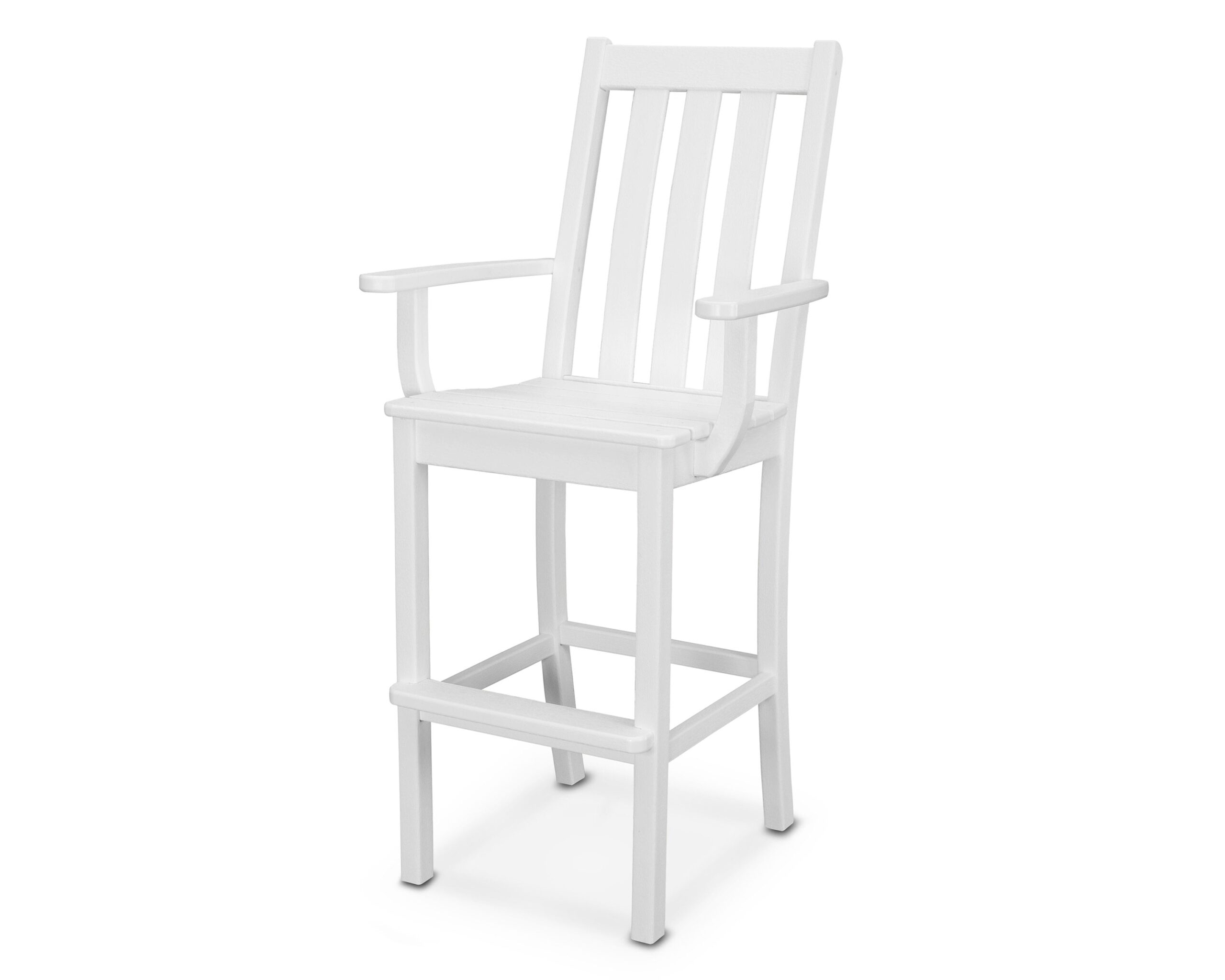
The Vineyard is the first chair I would shortlist for a permanent outdoor bar where people will eat as well as drink. It combines a back, arms and footrest without adding a swivel mechanism or a cushion that must be brought inside.
The VND232 specifications list a 30-inch seat and 37.5-inch arms. The seat itself is 19.3 inches wide × 17.3 deep, compared with the chair’s 24.9-inch overall width. Use the seat dimensions to compare personal fit and the overall width to plan the row.
Key specs: overall 24.9 inches wide × 26.3 deep; 32 lb; 300 lb stated capacity; HDPE plastic lumber; sold singly. The white bar-height version pictured is VND232WH.
Pros
- Arms, back and footrest for seated meals
- No upholstered seat to dry or store
- Published arm height makes fit checks easier
Cons
- Premium price for each chair
- Nearly 25 inches wide before elbow space
- Fixed seat and substantial weight
Choose this over the Nautical if you want a narrower, simpler dining chair. On the maker’s review page, some owners describe easy assembly while others report hardware or fit difficulties. Check the supplied parts against the Vineyard assembly instructions before tightening anything.
Skip it if: your counter is too low, its apron blocks the arms, or you need to rearrange the seating frequently.
Check the white Vineyard Bar at POLYWOOD
For an exposed counter: consider the separate Vineyard Counter Arm Chair VND231. It has a 24-inch seat and 31.5-inch arms, with the same 24.9-inch overall width. Check underside clearance; the bar chair pictured above does not adjust to this height.
2. Article Svelti Counter Stool: Best budget backrest for a sheltered counter
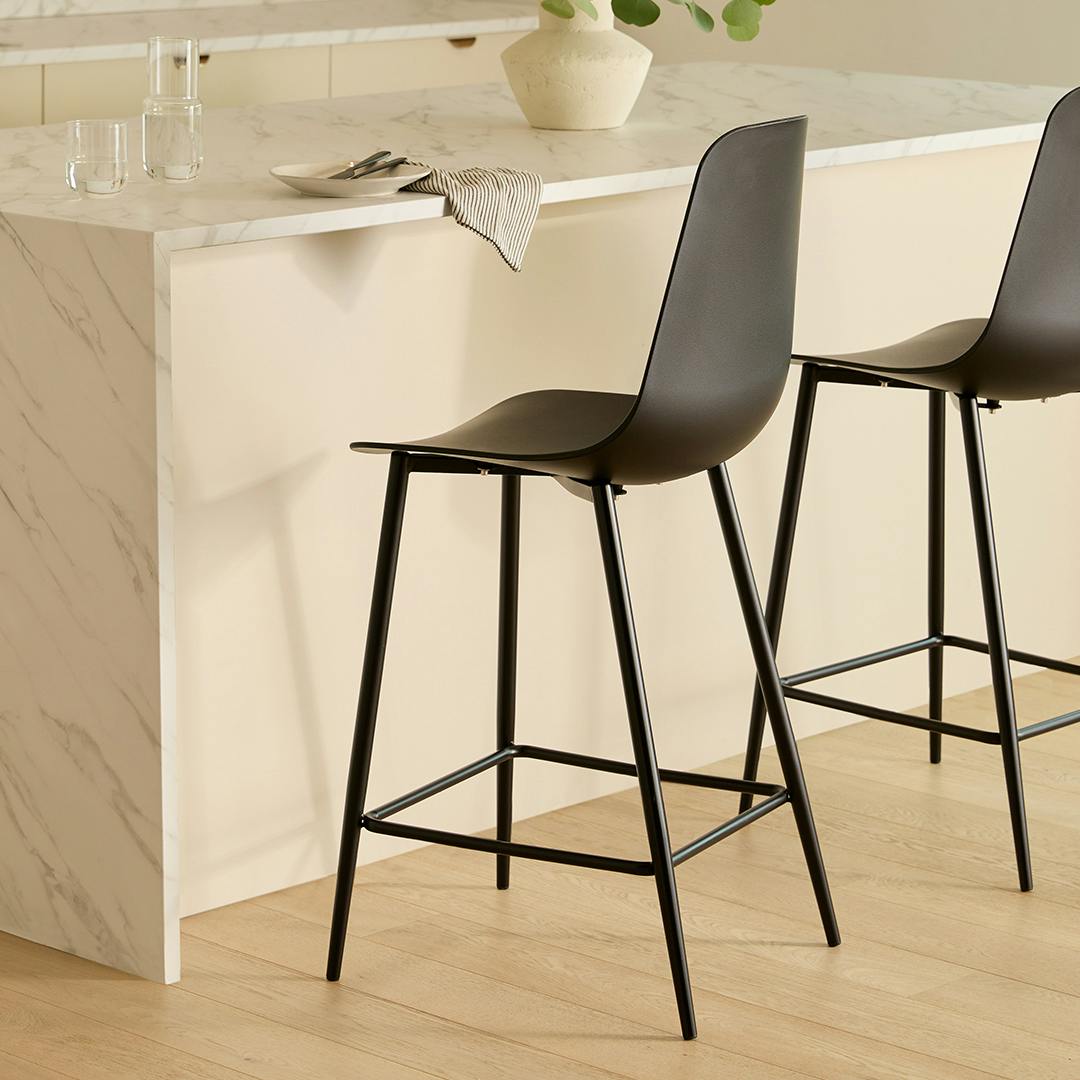
Svelti makes sense when you want counter-height seating with a back, but do not want bulky arms or loose cushions. Its armless shape also removes one obstacle to sliding the seat underneath a counter.
Article’s Pure Black counter version lists a 25.25-inch seat height and 17-inch seat depth. Confirm that you have selected Counter, rather than the separate Bar option.
Key specs: SKU17569; overall 18 inches wide × 20 deep; 14.25 lb; tested to 300 lb. The seat combines polypropylene and fiberglass; the legs are powder-coated metal.
Pros
- Back support at a budget price
- Armless design simplifies fitting a row
- No separate cushion required
Cons
- Care instructions limit prolonged sun exposure
- Hard seat with no swivel
- Counter and bar variants can be confused
Article permits outdoor use but also advises avoiding prolonged intense sunlight and extreme temperatures, and storing it out of direct sun when unused. That makes it a better fit for a sheltered patio with a storage plan than an uncovered bar where chairs stay out indefinitely.
Choose Svelti over the Flash stool for a backrest. Choose Flash when compact stacking is the priority. Svelti requires assembly; its four-bolt instructions show the correct washer order.
Skip it if: you need a bar-height seat or cannot provide the protection its care instructions require.
3. IKEA NÄMMARÖ Outdoor Bar Stool: Best affordable wooden stool
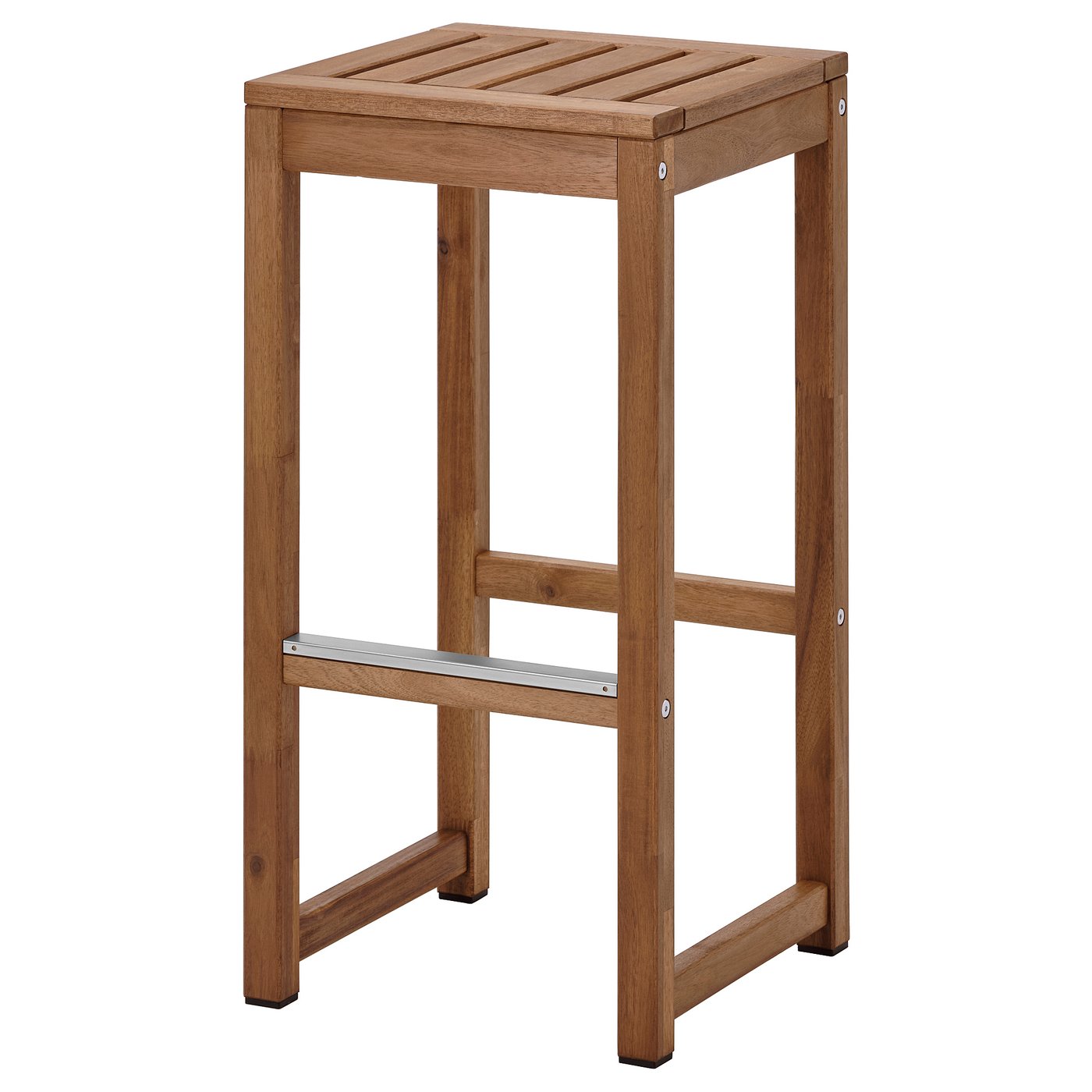
NÄMMARÖ is the straightforward choice for a wooden bar where backless seating is acceptable. The square seat and lack of arms keep the shape simple, and you can buy individual stools instead of committing to a large set.
The US model 705.102.96 has a fixed 28.75-inch seat, not an adjustable pedestal. Check delivery or collection for your location before building a whole seating plan around it.
Key specs: solid acacia with acrylic stain; seat and listed overall width/depth 14.375 inches. IKEA’s compliance text describes testing based on users up to 242 lb.
Pros
- Affordable route to real wooden seating
- Compact backless shape with a footrest
- Sold individually for an odd-numbered row
Cons
- Regular re-staining and protection required
- No back or arm support
- Small seat and lower published load figures
The real ownership cost is the care. IKEA’s wood-furniture instructions say to refresh the stain regularly; rain soaking into the wood instead of beading is a useful signal. Store it dry when possible, or cover it with ventilation.
For short drinks and extra seats, the compact shape is appealing. For long dinners, compare a backed chair before buying several. A cushion changes both comfort and effective seat height, so recheck the gap if you add one.
Skip it if: you want furniture you can leave unprotected without maintaining a wooden finish.
4. Flash Furniture 24-inch Backless Metal Stool: Best budget stackable counter stool
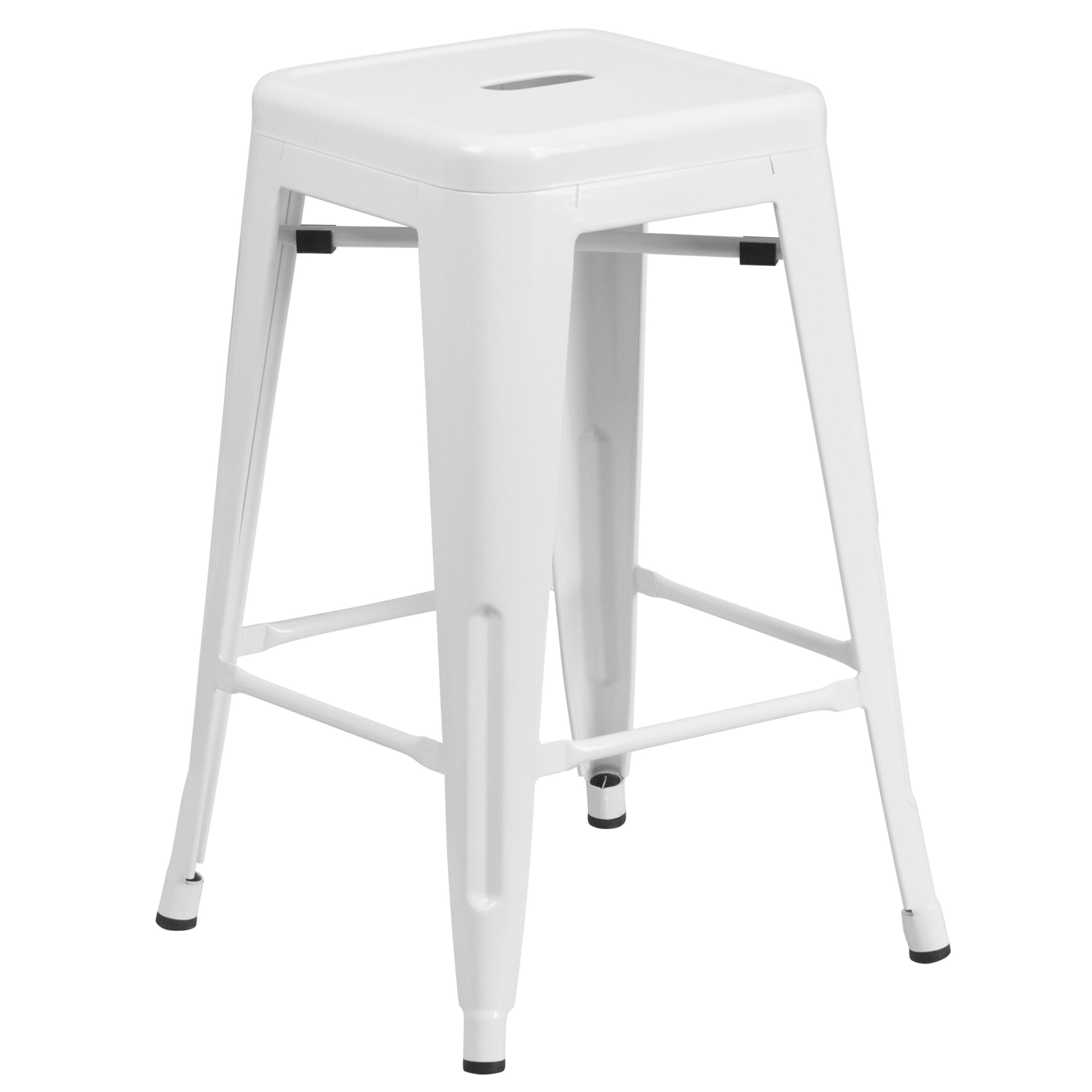
This Flash Furniture stool earns its place as compact extra seating that can be stacked away. It suits a counter where guests stop for a drink, or a patio that must be cleared after a party, better than an all-evening dining setup.
The exact white model is CH-31320-24-WH-GG, with a 24-inch seat. BizChair’s listing specifies galvanized steel with a powder-coated finish, a drain opening and protective caps between stacked stools.
Key specs: 12 × 12-inch seat; 500 lb stated capacity; no assembly required; listed stack quantity four to eight. Check the exact model’s stacking guidance rather than treating that range as a target.
Pros
- Stackable and supplied assembled
- Small seat with a drainage opening
- Low price for occasional extra places
Cons
- Narrow, hard seat without a back
- Needs protection from prolonged wet weather
The load figure is not a comfort rating: a 12-inch seat can feel restrictive regardless of the frame’s stated capacity. Compare its size with a seat you already find comfortable before ordering a row.
The seller explicitly advises protecting it from long periods of wet weather. Plan somewhere to put the stack; “indoor-outdoor” is not a reason to ignore that instruction. Keep the protective caps intact so stacking does not scrape the finish.
Skip it if: you need broad, backed seating for lingering meals or year-round uncovered storage.
5. POLYWOOD Nautical Swivel Bar Chair: Best swivel for a spacious bar
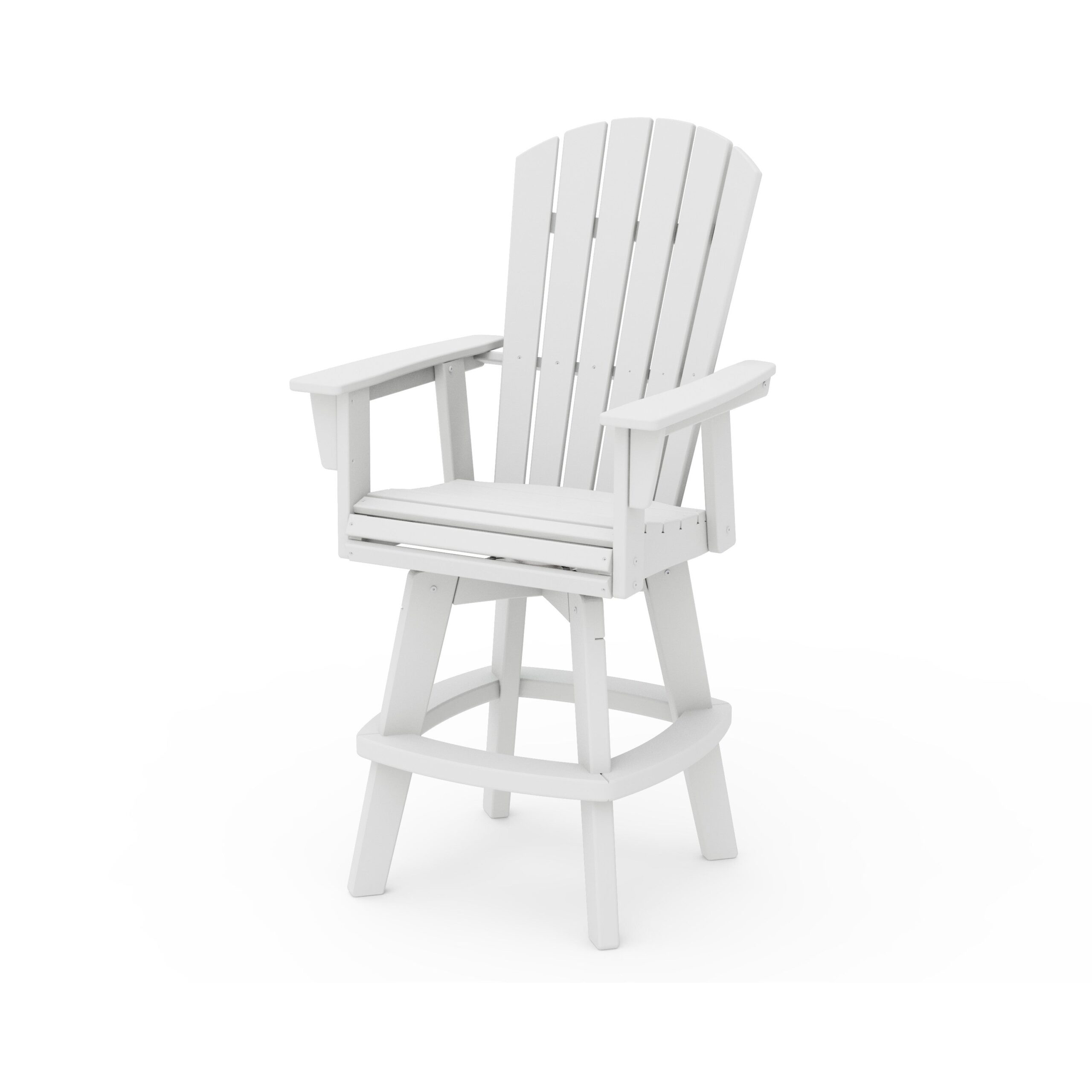
The Nautical Curveback Adirondack is the swivel option for a bar with room around it. Its broad back and arms suit a relaxed seating area where guests turn between the counter and the conversation. It is a substantial chair, rather than a compact stool to squeeze into the last gap.
Model ADDSV612 has a 29.4-inch seat and 37.7-inch arm height. Its seat measures 20.5 inches wide × 17.5 deep, versus 19.3 × 17.3 for the Vineyard. At 28.3 inches wide overall, it also takes more space along the bar before allowing room to turn.
Key specs: overall 28.8 inches deep; 61 lb; 300 lb stated capacity; HDPE plastic lumber; 360-degree swivel; sold singly. The white version pictured is ADDSV612WH.
Pros
- Full swivel with a back and arms
- No upholstered seat to bring inside
- Published seat, arm and overall dimensions
Cons
- High price and heavy to relocate
- Wide shape needs a generous turning area
- Assembly deserves careful checking
Owner feedback on the maker’s page includes both comfortable, successful setups and complaints about missing or mismatched hardware. Read the current assembly instructions and check the kit first; request correct parts instead of drilling new holes or substituting screws.
Choose this over the Vineyard when swivel movement is central to how you use the bar. For eating close to the counter, try a comparable Adirondack-shaped seat first: your preferred sitting posture matters more than a style label.
Skip it if: the patio is narrow, stools must be moved daily, or you want a compact upright dining row.
How do you check legroom and cushion height?
Check the actual gap: a 36-inch counter minus a 25.25-inch Svelti seat leaves 10.75 inches to the top. A thick slab or apron reduces the open space underneath. Sit at a comparable height and check knee room before deciding.
Include any planned cushion in the check. Adding two inches of compressed cushion raises the sitting position by two inches and reduces the gap by the same amount. Our outdoor cushions guide covers the separate cushion choice.
Will the arms fit under the counter?
A stool can match the countertop height and still fail to tuck in. The obstruction may be a support rail or apron beneath the slab, not the slab itself. Measure along the entire route the arm must travel.

For example, a 42-inch bar and a 30-inch seat have a 12-inch difference. But if the bar’s apron drops to 37 inches above the floor, the Vineyard’s 37.5-inch arms cannot slide beneath it. Those table dimensions are an illustration, not a particular table recommendation.
There is a separate knee-space question. A stool might slide under an overhang while its occupant’s knees hit a cabinet, bracket or panel. Check depth as well as height; the seat must work with a person sitting in it.
Where the underside is low, an armless stool may solve the arm collision, but it does not create knee room. Do not shorten chair legs to correct a mismatch. Choose the right height and shape for the table you have.
How many bar stools will fit along the counter?
Use overall chair width, including arms or splayed legs, rather than seat width alone. Then leave room between people and at the ends. A row of chairs whose widths add up to the counter length leaves no usable space for elbows or getting on and off.
A worked example: three 24.9-inch Vineyard chairs use 74.7 inches before gaps. Allowing 6 inches between chairs and 3 inches at each end gives 92.7 inches in total. They therefore do not fit that spacing plan along an 84-inch bar.
The gaps in that example are planning assumptions, not a universal comfort rule. Mark out the chair footprints and gaps with removable tape, then check the setup with the people who will use it. Wider bodies, arms and swivel movement can require more room.
A swivel chair also occupies space while turning. Test the full movement beside the next chair and counter edge, and leave a route behind occupied seats. Keep refrigerator and storage doors usable; our kegerator guide helps with the equipment side of the bar.
What should you look for before buying outdoor bar stools?
| Decision | What to check |
|---|---|
| Exposure | Read the exact model’s care instructions. Compare an uncovered site with a sheltered patio and available winter storage. |
| Seat and footrest | Compare seat width/depth with a comfortable chair, then check space between any arms. Overall width includes the frame; it is not your sitting space. Check foot support too. |
| Back and arms | Choose support for longer meals, then measure arm clearance. Backless seats are simpler to move around but suit different sitting preferences. |
| Swivel | Allow for the turning chair and occupant, not just the stationary footprint. Keep the mechanism clean and inspect its fixings. |
| Storage | Check whether stacking is specifically allowed. Do not assume all backless stools stack, or that a heavy chair will be easy to move indoors. |
| Load and assembly | Use the exact model’s stated limit and instructions. If the listing and manual disagree, get clarification before purchasing. |
| Cost for the whole row | Compare price per chair, then add delivery, cushions and covers. A photograph of two stools does not establish what the order includes. |
Decision checklist based on the linked product dimensions, assembly manuals and care instructions. Measurements and permitted use vary by model.
For a patio used mainly for occasional gatherings, start with the number of seats you regularly need. Extra guests may be better served by movable seating than by crowding the bar. A separate patio cooler can also keep people collecting drinks away from occupied stools.
Can outdoor bar stools stay outside all year?
Follow the model’s care instructions, not just the word “outdoor.” The five picks ask for different levels of protection. A covered patio also differs from a dry storage area: wind can still bring rain onto the furniture.
- POLYWOOD: clean the lumber and hardware. Its care guide specifically addresses corrosion prevention and rinsing hardware after saltwater contact; plastic lumber does not make every component maintenance-free.
- NÄMMARÖ: protect the wood, refresh the stain and allow ventilation under a cover. IKEA also advises periodically tightening the screws.
- Svelti: respect Article’s instructions to avoid prolonged intense sun and extreme temperatures, and store out of direct sunlight when unused.
- Flash Furniture: protect it from extended wet weather even though the listing permits outdoor use.
For wicker or rope alternatives, inspect the frame beneath the weave and the cushion instructions as well as the visible surface. Do not assume natural rattan, synthetic wicker and woven outdoor rope have identical care requirements. Ask for the exact materials if the listing only says “wicker.”
If you add cushions, dry them before storage and check their own cleaning instructions. If strong weather is forecast, follow the furniture maker’s storage guidance; the weight of a chair is not a wind-resistance guarantee.
What should you check when the stools arrive?
- Confirm the model, color, quantity and seat height before discarding the packaging.
- Check the frame, finish, floor glides and supplied hardware for damage or missing pieces.
- Follow the assembly sequence on a suitable flat surface. Stop if parts do not match the instructions.
- Place the stool on the intended level surface and check for wobble before use.
- Test sitting height, foot support, knee clearance, tucking-in and any swivel movement.
If ordering several expensive chairs, establish the return and delivery terms first. Trying one can be worthwhile when the seat shape or your counter dimensions are unusual, provided the seller’s terms make that practical.
How I chose these outdoor bar stools
This shortlist compares current US product specifications, materials, care requirements, assembly documents and purchase options. The five main picks cover outdoor dining, a sheltered counter with a back, affordable wood, stackable extra seating and a spacious swivel position; the separate Vineyard Counter model covers an exposed counter.
Owner reviews and questions on the IKEA and POLYWOOD pages helped identify checks worth making, including assembly hardware and matching the chair to a table. An outdoor-kitchen discussion about finished counter height reinforces measuring the completed surface. Individual reports do not establish a product’s failure rate.
Manufacturer load figures are reported as supplied, not treated as comfort scores; options with unclear outdoor suitability or conflicting load information were left out. The recommendations prioritize fit and documented care. For drinks and serving ideas to go with the seating, explore our bar and cocktail guides.
