My starting pick is the Weber Smokey Mountain 14 for compact charcoal smoking. For pellet cooking, consider the smaller Pit Boss PB150PPB for battery operation or the GMG Trek for app controls and a larger hopper. The Ninja OG301 suits a powered campsite; check car fit, lifting and departure time before choosing.
A smoker can fit a small patio and still be awkward to take camping. A long body, loose sections or a missing power cable can matter more than the word “portable” on the box. These six options suit different trips; none is a backpacking stove.
Which portable smoker fits your trip?
| Smoker and best use | Weight, power, space and budget |
|---|---|
| Weber Smokey Mountain 14 Compact charcoal smoking |
Weight: not confirmed Fuel: charcoal; no electricity Space: 286 sq. in., two grates Price band: lower |
| Pit Barrel Junior Premier 14 Hanging ribs |
Weight: 38 lb listed Fuel: charcoal; no electricity Space: hanging layout; four hooks included Price band: middle |
| Pit Boss PB150PPB Compact battery pellet cooking |
Weight: 46.7–48.5 lb* Power: battery or AC adapter Space: 256 sq. in., two racks Price band: higher |
| GMG Trek Prime 2.0 App controls and larger hopper |
Weight: 61.5 lb Power: 12V DC / AC adapter Space: 274 sq. in. Price band: middle |
| Traeger Tailgater Freestanding pellet setup |
Weight: 60.2–62 lb* Power: 120V AC Space: 300 sq. in., one grate Price band: middle |
| Ninja Woodfire OG301 Powered campsite grilling and smoking |
Weight: 31.94 lb Power: 120V AC, 1,760W Space: 141 sq. in. Price band: middle |
US manufacturer listings and manuals linked in the cards, checked November 8, 2026. Price bands: lower = under $300; middle = $300–$499.99; higher = $500+. Listed cooker prices exclude tax, shipping and extra equipment; promotions and dealer pricing vary.
*Pit Boss and Traeger sources disagree on weight; details below. Figures are not complete travel-kit weights. Areas may span multiple levels, so compare food shape as well as totals.
Will it work for the whole trip?
- Fit and lift: measure the loading opening and lip before the cargo floor. Use assembled or folded cooker measurements, including handles, and allow for a cold, secure lift.
- Power and equipment: count the table, fuel, battery, cables and thermometer in both the budget and the car. Confirm the destination permits your cooking setup.
- Departure: leave time for the prescribed shutdown, complete cooling and cleanup before loading. A cooker that suits an overnight stay may be awkward for a meal just before checkout.
Day-trip example: if you must drive home shortly after lunch, a long charcoal cook can leave you waiting beside a hot smoker. For an overnight stay, cooking earlier gives more scheduling room, although the cooker still needs supervision and must be cold before loading.
The car-fit diagram and exact dimensions below help check the first step. The packing and shutdown checklist covers the journey home.
Pellet-fired and electric-with-pellets are different. The Pit Boss, Trek and Tailgater burn pellets for cooking heat; electricity runs their ignition, fans and controls. The Ninja’s electric element supplies heat while its smoke box adds flavor, so it needs much more electrical power.
Which portable smoker should you choose?
1. Weber Smokey Mountain 14: Best compact charcoal smoker
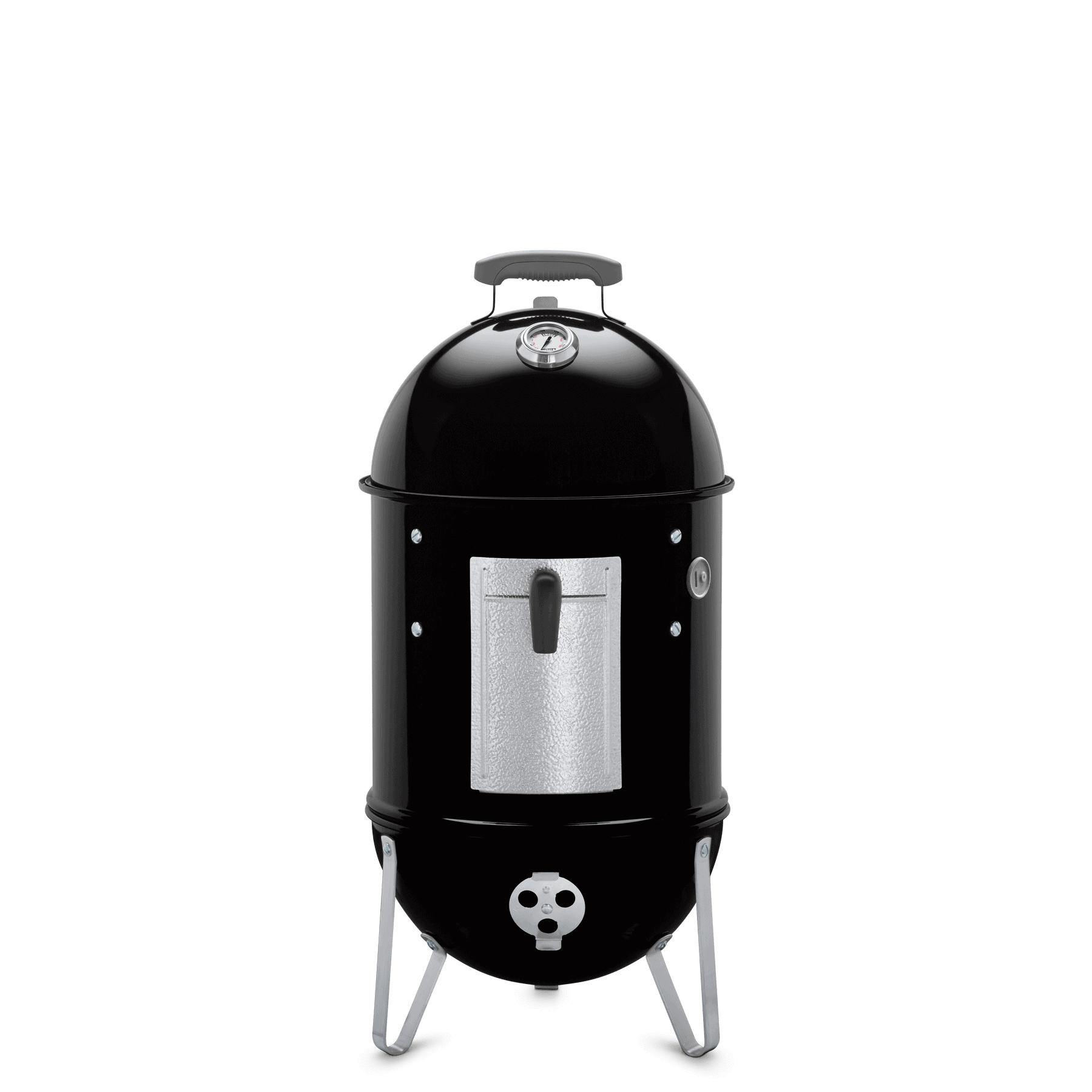
The 14-inch Smokey Mountain is my starting choice when a small footprint and independence from electricity matter most. It gives you a dedicated smoking setup without packing a controller, battery or inverter. Choose the 14-inch model deliberately: the larger Smokey Mountains solve a different capacity problem.
Weber lists 286 square inches across two grates, inside a body measuring 14.7 inches wide and deep. Two levels help with separate cuts, but they do not create one large surface for a long brisket. Check the food’s shape, not just its weight or the combined area.
The water pan and adjustable dampers provide a conventional charcoal-smoking workflow. You still need to learn the airflow settings and monitor the cook. A silicone grommet gives a probe cable a route into the chamber; our smoker thermometer guide explains what to monitor.
Equipment budget: the two grates and water pan provide the cooking setup. Add charcoal, lighting supplies and a food thermometer, and check whether your seller includes a cover. The lid thermometer measures the cooker, not the center of your meat.
Transport check: the lid, center section and lower bowl are separate components. Pack them securely when cold; do not treat the lid handle as a handle for the assembled smoker. Weber’s current US listing does not give an assembled weight, so verify that before buying if lifting is a constraint.
Pros
- No electrical supply required
- Two grates in a narrow footprint
- Fuel door and probe-cable grommet
Cons
- Small individual grates limit long cuts
- Separate sections need secure packing
- Manual fire management and ash cleanup
Skip it if: you regularly need a full-size brisket to lie flat, or want push-button temperature control.
2. Pit Barrel Junior Premier 14: Best for hanging ribs
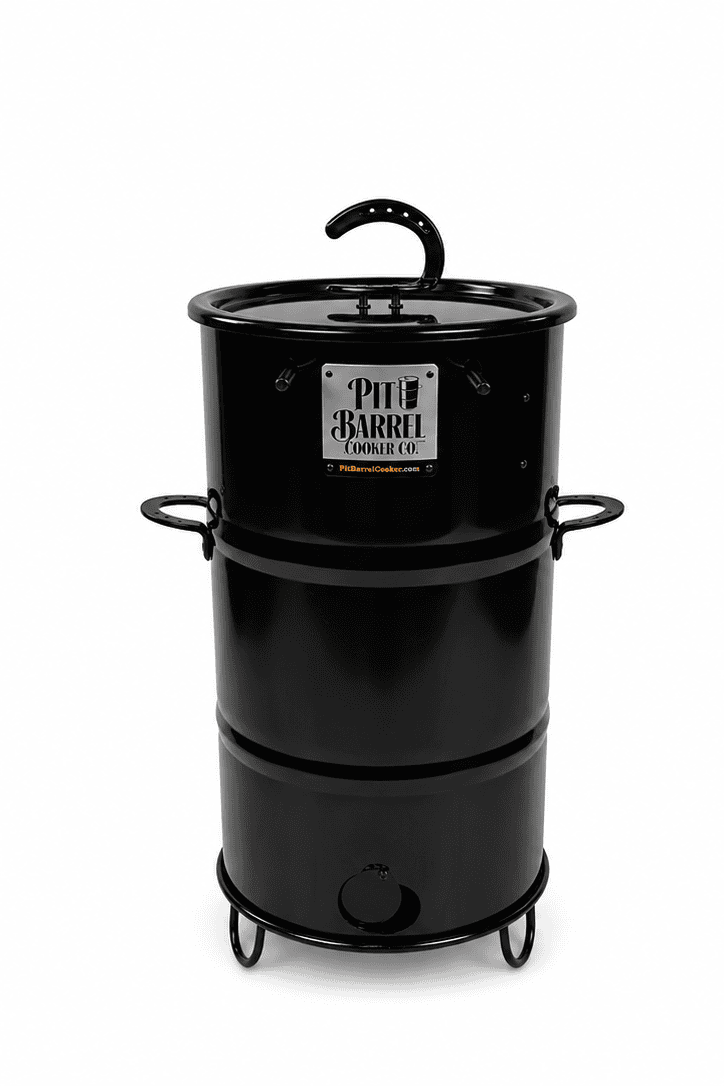
The Junior Premier earns its place by using the drum’s height for food. If ribs are the reason you want a travel smoker, hanging them can be more useful than buying another small horizontal grate. It is a different cooking arrangement from the Weber’s stacked racks, rather than a universally better one.
The current Premier package includes four hooks, hanging rods, a standard grate, an attachable ash pan and a detachable heat shield. Those details distinguish it from older Junior listings. The included four hooks also matter more to your first cook than an advertised maximum capacity using additional accessories.
Pit Barrel’s comparison guide lists a 38 lb weight and an overall height of 33 inches with the lid and stand, plus 21.25 inches across the side handles. That handle width is the car-fit measurement to check; “14-inch barrel” is not its complete outside width.
Use the maker’s lighting and elevation-setting instructions before the first trip. Leave room below hanging meat and follow the recipe for when food needs transferring to the grate. The intake does not close fully to extinguish the coals, so allow for the fuel to burn out and the cooker to cool before departure.
Pros
- Hanging layout makes use of drum height
- Hooks, grate and ash pan included
- No mains electricity or battery needed
Cons
- Handles make it wider than the barrel
- Less direct temperature selection than a pellet controller
- Intake cannot close fully to snuff the coals
Skip it if: you need to leave soon after eating, mainly cook small pieces needing broad grate space, or have shallow cargo storage.
3. Pit Boss PB150PPB: Best compact battery pellet option
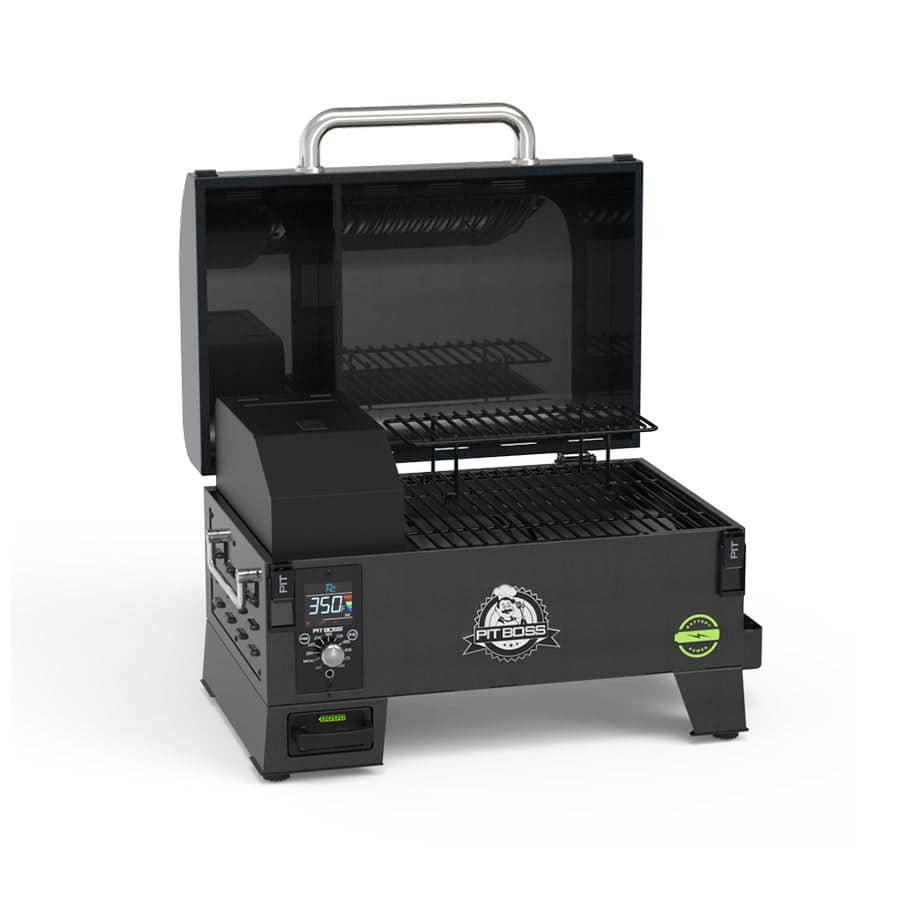
The PB150PPB is the pellet model I would consider first when storage space and battery operation matter more than app controls. It has a shorter, lower body than the Trek, side handles and lid latches. You still need a suitable support surface and a plan for lifting it.
Pit Boss lists 256 square inches across two racks and a 7 lb hopper. Its PB150PPB manual gives a 180–500°F (82–260°C) controller range and a sliding Flame Broiler for direct heat. The upper rack adds space without enlarging the main grate.
Plan around 48.5 lb: that is the manual’s weight, while the product-page text says 46.7 lb. The listed assembled size is 26.3 × 18.1 × 15 inches, rounded slightly from the manual. Neither figure represents the entire kit with fuel and a table.
Equipment budget: the listing includes an AC adapter, one meat probe and a cover. Pit Boss describes the separate battery and charger kit as a replacement; confirm the supplied battery and charger in your seller’s package, and budget separately for a spare and support surface.
The maker advertises up to 15 hours from a battery, not a guaranteed runtime for your cook. Keep enough charge for the fan’s shutdown cycle, and use the specified battery and charger. Compared with the Trek, you give up its larger hopper and app controls for a more compact body.
Pros
- Battery operation with AC backup
- Smaller and lighter than the Trek
- Direct-heat option, probe and cover
Cons
- Needs a suitable support surface
- Smaller hopper than the Trek
- Battery charge limits the cooking schedule
Skip it if: you want app control, a larger hopper or a cooker with standing-height legs.
4. Green Mountain Grills Trek Prime 2.0: Best for app control and a larger hopper
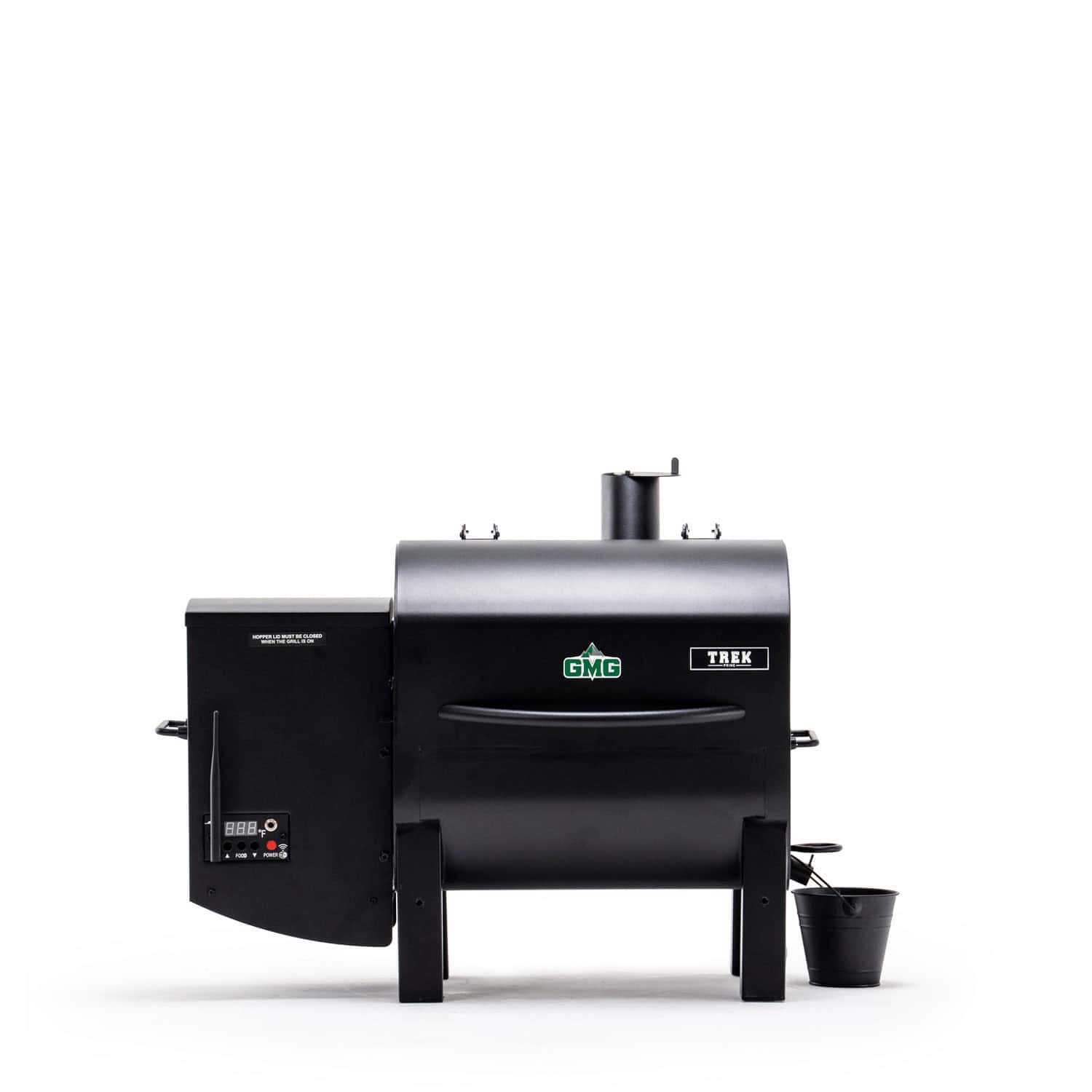
The Trek Prime 2.0 suits a vehicle-based setup where app controls, a larger hopper and a wider temperature-setting range justify extra bulk. Against the Pit Boss, its advantages are the 10 lb hopper and connected controls. Those features matter more here than a small difference in total cooking area.
GMG’s Prime 2.0 catalog lists 274 square inches of cooking area, a 10 lb hopper and a 61.5 lb grill weight. At 36 inches wide, it remains a substantial object to lift and store. The optional cart is a separate purchase and a separate transport problem.
Equipment budget: a food probe is included, but the current listing sells the DC power cord and alligator clips separately. Allow for those if using a battery, plus the power source, cover and a suitable table or optional cart.
The controller offers a 150–550°F (66–288°C) setting range and app control. Neither proves that every point on the grate stays at the displayed temperature. Set up the heat shield as the Trek manual directs, and practice a complete cook and shutdown with your chosen power source before leaving home.
Pros
- Documented 12V operation
- 10 lb pellet hopper
- Controller, food probe and app functions
Cons
- 61.5 lb before fuel and accessories
- Battery cable accessories cost extra
- Wide body; optional cart adds bulk
Skip it if: you want a light carry from a distant parking space, or have no dependable electrical supply.
5. Traeger Tailgater: Best freestanding pellet setup
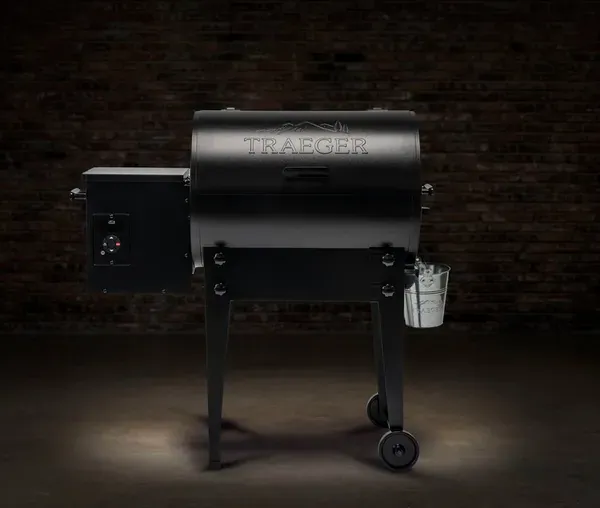
The Tailgater’s folding legs let you cook at standing height without packing a separate grill table. It suits tailgating beside a vehicle better than carrying a smoker a long way across a campsite. Budget for a suitable electrical supply and any approved extension cord, plus a cover.
The current black Tailgater has a 300 sq. in. grate, an 8 lb hopper and 120V AC power requirements. It uses an onboard controller and includes a meat probe, but has no WiFIRE connectivity. For this use, straightforward local controls can be more useful than another app.
Traeger’s TFB30KLF support guide gives the folded dimensions as 37 × 18 × 21.5 inches, versus 36 inches high with the legs extended. Check the folded measurements against the opening, not the smaller shipping-carton measurements. The support guide gives 60.2 lb; the sales page lists 62 lb.
Plan around roughly 62 lb, plus anything left inside. Fold and secure the legs using the owner’s instructions, with the cooker cold. Wheels help on suitable ground; they do not solve the lift into a trunk.
Pros
- Folding legs provide cooking height
- 20 × 15-inch main grate
- Local controller needs no phone connection
Cons
- Needs a suitable 120V supply
- Heavy and 37 inches long even folded
- Smaller hopper than the Trek
Skip it if: the vehicle opening is tight, lifting is difficult, or you want direct 12V operation.
6. Ninja Woodfire OG301: Best for a powered campsite
The Woodfire OG301 makes sense when the campsite supplies suitable electricity and you want a relatively compact grill that also smokes. The electric element supplies cooking heat while a separate smoke box burns pellets. It avoids charcoal-fire management, but it does not become a fuel-free appliance when using the smoking function.
Ninja’s OG301 listing specifies a 141 sq. in. grate and 31.94 lb weight. Its body is smaller than the pellet picks here, but so is its cooking surface. This US model’s 1,760W, 120V heater also needs substantially more electricity than a pellet controller.
Check the outlet’s distance as well as its rating: the cord is only 36 inches long. Confirm the circuit’s available capacity, including other appliances, and follow the supplied manual’s outdoor outlet, GFCI and extension-cord requirements. A hookup across the pitch may need equipment you have not packed.
Use Ninja Woodfire pellets in the smoke box. Ninja’s OG300-series guide specifies their compatibility; do not assume the fuel pellets bought for a conventional pellet grill are interchangeable. They supply smoke flavor while the element supplies heat.
Equipment budget: the grill grate, smoke box, grease tray, pellet scoop and starter pellets are included. Add a suitable stand or table, thermometer and cover as needed; OG301 does not include the Pro Connect XL’s app or dual thermometers.
Pros
- Smaller body than the pellet picks
- No charcoal fire to manage
- Electric grilling and pellet smoke in one unit
Cons
- High electrical demand for camping
- Small grate limits larger meals
- Needs a suitable outdoor support surface
Skip it if: you camp without suitable mains power, or regularly cook large cuts for a group.
Will the smoker actually fit in your car?
Measure the opening before the cargo floor: check the narrowest width, the height above the loading lip, usable floor depth and clearance under the closing hatch. Include the smoker’s handles, chimney and folded legs, plus room for your hands. A cardboard outline can expose a bad fit before you order.

| Model | Dimensions to start the fit check |
|---|---|
| Weber 14 | 14.7 W × 14.7 D × 31.4 H inches, assembled with lid closed. Separate sections still need secure storage. |
| Junior Premier | 21.25 inches across handles; 33 inches high with lid and stand. Confirm the complete front-to-back envelope. |
| Pit Boss PB150PPB | 26.3 L × 18.1 W × 15 H inches assembled. The manual rounds the height to 14.9 inches; allow room beyond either figure. |
| Trek Prime 2.0 | 36 W × 18 D × 24 H inches, grill without the optional cart. |
| Tailgater | 37 L × 18 D × 21.5 H inches with legs folded. Do not use carton dimensions. |
| Ninja OG301 | 18.62 L × 17.28 W × 13.39 H inches, as listed by Ninja. Stand is extra. |
Sources: the manufacturer pages, GMG catalog and Traeger support guide linked above, November 2026. L/W/D labels follow each maker. These are cooker dimensions, not guaranteed packing clearances or operating clearances.
For example, a 21-inch-high opening cannot accept the Tailgater’s listed 21.5-inch folded height upright. A 22-inch opening leaves only half an inch before accounting for the lip, protrusions or your grip. Check the real shape; do not assume you can tip a greasy cooker safely to make it fit.
Fuel changes the lift. GMG lists the Trek at 61.5 lb with a 10 lb hopper capacity. Adding 10 lb of pellets brings that combination to 71.5 lb before any other accessories. Pack fuel separately and follow the manual’s transport instructions; the calculation is not a recommendation to move it full.
What power will you have where you cook?
The Weber and Pit Barrel need charcoal and lighting supplies. The Pit Boss uses its specified battery system or AC adapter; the Trek supports a compatible 12V supply or AC arrangement. Tailgater and Ninja require 120V AC, with much more capacity needed for the Ninja’s heater.
- No electrical supply: start with charcoal, if the destination permits it.
- Vehicle or leisure battery: check connector, voltage, startup demand and usable battery capacity. Do not assume a cigarette-lighter lead is included.
- Power station: check output rating and energy capacity separately. A watt rating says what it can supply, not how many hours it will run.
- Campsite hookup: confirm the circuit and permitted cooking equipment before booking around a particular smoker.
Keep power available through the pellet grill’s prescribed shutdown cycle; pulling the plug is not the normal shutdown procedure. Weather, cooking temperature and duration affect energy and fuel use, so I would not turn a hopper size or peak watt figure into a guaranteed cook time.
How much food can a portable smoker really hold?
Compare the usable shape of each cooking level. The Weber’s 286 sq. in. is split across two grates; the Tailgater’s 300 sq. in. is one 20 × 15-inch surface. Those figures are close, but they do not accommodate the same cuts in the same way.
Measure a typical rack of ribs, roasting pan or brisket before choosing, allowing space around the food for airflow and probe placement. For the Pit Barrel, check hanging length and hook count. For a tabletop cooker, check lid clearance as well as the grate footprint.
Start the meal plan with how much meat to buy per person, then check whether those cuts fit. Avoid treating a manufacturer’s burger count as a promise that the same smoker will hold a group’s complete barbecue menu.
- Rib-focused meal: the Junior’s four supplied hooks let you plan around hanging cuts; leave clearance above the coals. The maker’s larger advertised rib capacity needs extra hooks.
- Compact smoker meal: Ninja’s baby-back-rib recipe uses two racks cut in half. That is a useful example of adapting the food’s shape, not a promise that every rack fits.
- Mixed menu: measure the actual meat and side-dish pans against each grate. On two-level models, allow height and access between racks; reserve space for sides or cook them separately.
Can these smokers also grill burgers and steaks?
Smoking and searing ask different things of a cooker. Ribs and pork shoulder suit sustained indirect heat; a browned steak benefits from intense surface heat. A high controller setting alone does not prove that a grill exposes food to direct flame.
- Pit Boss: 180–500°F (82–260°C) controller settings plus a sliding Flame Broiler for direct heat, used as its manual directs.
- Trek: 150–550°F (66–288°C) settings and a heat-shield cooking layout. Its upper setting is not a measured searing result or proof of uniform grate temperature.
- Tailgater: Traeger lists a maximum of 450°F (232°C). It can cook burgers, but do not buy it expecting an open-flame steak grill.
- Ninja: electric grilling as well as smoking, with preheating important for browning. Match recipes to OG301’s functions; other Woodfire models have different modes and accessories.
The Weber and Pit Barrel earn their places for charcoal smoking and hanging capacity. If most meals are quick burgers or steaks, a dedicated portable grill may be a better purchase. Treat any smoker temperature quoted here as a cooking setting, not a safe internal food temperature.
Temperature limits and cooking arrangements: GMG catalog, Pit Boss manual, Traeger support guide and Ninja product/series guide linked above; checked November 2026. These are maker specifications, not comparative performance measurements.
What should you check before buying?
| Factor | Why it matters and what to check |
|---|---|
| Lifting and grip | You must clear the loading lip, not just lift from the ground. Inspect handles and plan help where needed. |
| Operating footprint | A cooker that fits the car may not fit the pitch safely. Check the manual’s clearances and allowed support surface. |
| Food shape | Grate area can be split between levels. Check individual dimensions, hanging clearance and lid height. |
| Control method | Choose manual charcoal management or a powered controller. Neither removes the need to monitor food temperature. |
| Total equipment | Allow for a stand, cover, thermometer, power accessories, fuel and cleanup supplies when comparing cost and cargo space. |
| Return-trip cleanup | Check ash and grease access. Loose trays and dirty racks need secure storage after everything cools. |
Buying criteria drawn from the six makers’ specifications and operating instructions, November 2026; check the exact model manual before use.
Do you need a separate smoker for trips?
If you own a suitable lidded charcoal grill, try an indirect cook before buying another appliance. Our two-zone grilling guide explains the layout; follow your grill’s smoking and fuel instructions.
For trips that mostly mean burgers and sausages, start with the portable grill guide. For more pellet options, see the portable pellet grill roundup.
The Traeger Ranger is worth comparing when a compact box matters more than weight. Its included griddle is useful, but the listed 60 lb buys 176 square inches of cooking area. I favor the Tailgater’s larger grate and standing-height legs when its folded body fits.
If buying a used Ranger, check the 2018 Scout/Ranger recall for grills sold March–July 2018. The affected drip trays could leak grease and cause a fire; verify the remedy before using an affected unit.
Joe Jr and Broil King Keg can also suit occasional transport. Broil King documents an optional hitch adapter for the Keg 5000; confirm local availability, vehicle compatibility and installation requirements. This is a different transport arrangement from loading a cooker into the car.
Propane is another route when avoiding electrical dependence matters, but the cylinder and hose become part of the packing plan. This shortlist concentrates on charcoal, pellet and electric models with distinct travel uses. It is not a claim that every portable smoker uses one of those three systems.
What changes in wind, rain and cleanup?
Read the exact model’s weather restrictions before relying on a forecast. The PB150PPB manual prohibits use in rain or around a water source and notes that wind affects cooking temperature. Wet pellets can swell and jam its feed system; keep stored fuel dry.
Do not solve bad weather by cooking inside a tent, vehicle or enclosed shelter. Preserve the manual’s ventilation and clearances, and allow flexibility in meal timing. A storage cover is not permission to operate a covered grill.
- Charcoal: contain completely cooled ash and secure loose sections. The Junior’s included ash pan helps collect residue; it does not shorten the time needed for the fire to go out.
- Pellet grills: follow the burn-pot and grease-channel cleaning schedule, and check the grease container before travel. Finish the powered shutdown before disconnecting or removing the battery.
- Ninja: its series guide calls for cooled smoke-box contents to be discarded and the removable grate and grease tray to be hand-washed. Include washing facilities and drying time in the trip plan.
What should you pack, and when can you pack up?
Pack the model’s approved fuel, ignition supplies, thermometer, heat-resistant gloves, utensils, cleaning materials and any required power accessories. Choose the right wood format: chunks, chips and fuel pellets are not interchangeable. See our wood and cooker compatibility guide.
- Check the destination: confirm fire restrictions, cooking rules, power and the manual’s clearances before unloading.
- Cook outside on the specified surface: keep clear of tents, vehicles and overhead combustibles. Electric smokers in this guide are outdoor appliances too.
- Follow the model’s shutdown sequence: allow enough time after the meal for fuel to extinguish and the cooker to cool completely.
- Clean and secure only when cold: dispose of ash as the site permits, contain grease and secure detachable parts before loading.
The CPSC specifically warns against putting a warm charcoal grill in a camper: coals can continue producing carbon monoxide with the lid closed. A departure deadline does not make a warm smoker safe to pack. Plan the meal and cooling time around the journey home.
How I chose these portable smokers
I compared current manufacturer listings, dimensions, fuel arrangements and operating instructions with the practical jobs a travel smoker must do. The six picks cover charcoal smoking, hanging cuts, battery operation, connected pellet controls, folding legs and electric grilling. Model identification matters: Trek Prime 2.0, Junior Premier, PB150PPB and OG301 have specific equipment and instructions.
I also read owner discussions about cold-weather Tailgater use and Trek temperature behavior, using them to identify checks worth making rather than estimate failure rates. Manufacturer documentation supplies the specifications. Where it disagrees, as with Pit Boss and Tailgater weights, the difference is stated; missing measurements are not filled with guesses.
I checked CPSC recall results by brand and model. These recommendations prioritize transport, power and meal fit; they do not claim a comparative taste test. Large backyard cookers and heavy ceramic models can suit occasional transport, but they are weaker starting choices when regular loading and carrying are the main requirement.
Start with the trip: Weber for compact charcoal, Pit Barrel for hanging ribs, Pit Boss for compact battery cooking, Trek for app controls and hopper capacity, Tailgater for folding legs, or Ninja for suitable mains power. If the lift, fit or departure schedule fails, choose a simpler meal or cooker.
For thermometers, fuel accessories and other equipment to complete the setup, browse our BBQ equipment guides.
